
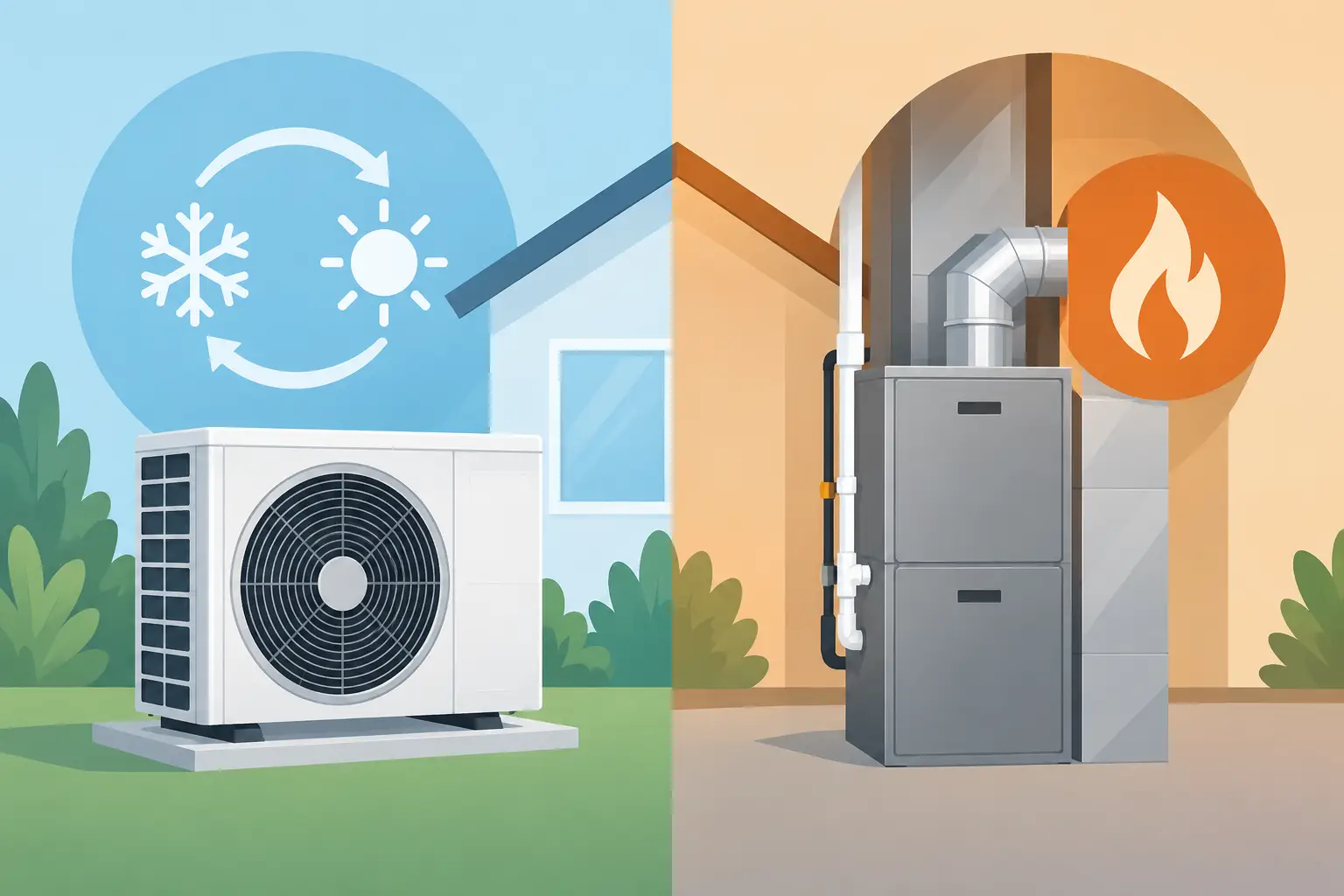
A heating decision can shape far more than a utility bill. It affects room-by-room comfort, summer cooling, indoor air quality, the scope of a remodel, and the home’s long-term environmental impact. When comparing heat pumps versus furnaces, Bay Area homeowners have an advantage: our generally mild climate makes efficient electric heating a practical option for many homes. Still, the right answer depends on the house, the project, and how your family lives in the space.
Heat Pumps Versus Furnaces at a Glance
A furnace creates heat, usually by burning natural gas. It sends that heat through ductwork to warm the house. Most furnaces are built only for heating, so a separate air conditioner is needed for cooling.
A heat pump works differently. Rather than generating heat through combustion, it moves heat from one place to another. In winter, it pulls available heat from outdoor air and brings it inside. In summer, it reverses direction and works like an air conditioner, moving indoor heat outside.
That difference matters in Northern California. A heat pump can provide both heating and cooling in one system, which may simplify equipment planning during a whole-home remodel, addition, or new construction project. A furnace can remain a sensible choice, particularly in homes with a newer gas system and well-designed existing ductwork. Neither option is automatically right for every property.
Why Heat Pumps Appeal to Bay Area Homeowners
The strongest argument for a heat pump is efficiency. Because it transfers heat instead of creating it from fuel, a modern heat pump can deliver more heating energy than the electricity it consumes under the right conditions. Bay Area winters are usually moderate, which is where air-source heat pumps tend to perform especially well.
A heat pump also gives homeowners one system for year-round comfort. That can be valuable in older East Bay homes where adding central air conditioning is part of a larger update. Rather than installing a furnace now and addressing cooling later, a heat pump can handle both needs as part of a coordinated plan.
There is also an environmental consideration. Replacing on-site gas combustion with electric equipment can reduce a home’s direct fossil fuel use. The climate benefit grows as the electrical grid continues to add cleaner energy sources. For homeowners planning solar, improved insulation, high-performance windows, or other efficiency upgrades, a heat pump can fit naturally into a more responsible home strategy.
Comfort is another meaningful benefit. Many heat pumps run at lower, steadier output for longer periods instead of delivering short bursts of very hot air. The result can be more even temperatures and fewer hot or cold spots, provided the system is correctly sized and the ducts or indoor units are properly designed.
The trade-offs to consider
The upfront cost of a heat pump can be higher than replacing a basic furnace alone, especially when a home needs new ducts, electrical upgrades, or air sealing work. Comparing a heat pump to a furnace without accounting for the cost of a separate air conditioner can make the furnace appear less expensive than the full picture.
Heat pumps also produce air that often feels less hot at the supply register than furnace air. That does not mean the home will be cold. It simply means the system delivers comfort differently. Homeowners who are used to the intense warmth of a gas furnace may need time to adjust to a steadier heating cycle.
In a major cold snap, heat pump capacity can decrease as outdoor temperatures fall. This is less of a concern in much of Oakland, Berkeley, Alameda, Orinda, and the surrounding Bay Area than it is in colder climates. Even so, equipment selection should reflect the specific microclimate, elevation, insulation level, and heat loss of the home.
When a Furnace Can Still Be the Better Fit
A high-efficiency gas furnace remains a dependable heating choice for many homes. It provides fast, high-temperature heat and performs consistently even on the coldest nights. For a homeowner replacing an aging furnace while keeping an existing central air conditioner that still has useful life, a furnace replacement may be the most practical near-term decision.
A furnace may also make sense when budget limits the work that can happen now. If a home needs significant electrical service upgrades before it can support a heat pump, the owner may choose to phase the project. That is a valid approach, particularly when other needs such as roof repairs, structural work, kitchen remodeling, or bathroom updates take priority.
Existing infrastructure matters. A home with sound, adequately sized ducts and a relatively new gas connection may be easier to keep on a furnace system. But older ducts should not be accepted without review. Leaky, poorly insulated, or undersized ducts waste energy regardless of the heat source and can undermine comfort in every room.
Furnaces do come with responsibilities. Gas combustion creates exhaust that must be safely vented, and the system requires regular inspection and maintenance. Properly installed and maintained equipment is designed to operate safely, but moving away from combustion removes that source from inside the home.
Remodeling Is the Best Time to Look Beyond the Equipment
Heating and cooling choices are most effective when they are planned with the home’s overall design. A room addition changes the home’s heating load. Opening a wall between a kitchen and living room changes airflow. New windows, insulation, and air sealing can reduce the size of the system needed to keep the house comfortable.
This is why replacing equipment by matching the size of the old unit can be a mistake. Older systems are often oversized, especially after energy improvements. A qualified HVAC professional should perform a load calculation based on the current or planned home, not just the nameplate on the existing furnace.
A remodel also creates opportunities to consider alternatives to conventional ducted systems. Ductless mini-splits can work well for additions, converted garages, or homes where installing large ducts would disrupt finished spaces. Ducted heat pumps may be the better choice when homeowners want a more traditional central-air feel. The best layout depends on the floor plan, ceiling cavities, aesthetic goals, and how individual rooms are used.
Electrical planning deserves attention early. Heat pumps require electrical capacity, and some older homes may need panel upgrades or service changes. Addressing this during a larger renovation is often cleaner and more cost-effective than opening finished walls later. It also leaves room for future electrical needs, such as induction cooking, electric vehicle charging, or solar storage.
Cost Should Include the Whole Life of the System
The purchase price is only one part of the decision. Homeowners should consider installation work, expected energy use, maintenance, equipment life, available incentives, and whether the system replaces both heating and cooling equipment.
Local utility rates can make operating-cost comparisons more complicated than simple national averages suggest. A heat pump’s performance depends on its efficiency rating, outdoor temperatures, duct condition, thermostat settings, and the home’s envelope. A gas furnace’s cost depends on gas rates, furnace efficiency, and the cost of operating a separate air conditioner in warm weather.
Ask for proposals that explain what is included: equipment, duct modifications, electrical work, permits, condensate drainage, thermostat controls, and any necessary repairs to the attic or wall areas used for installation. Clear scope details help prevent a low initial number from becoming a more expensive project later.
Start With How You Want the Home to Feel
For a whole-home renovation or new build, a heat pump is often worth serious consideration because it supports efficient heating, air conditioning, and a lower-combustion home. For a focused replacement in a home with functioning cooling equipment and tight project constraints, a furnace may still be the sensible choice.
The most useful next step is not choosing a brand or chasing a single efficiency rating. It is understanding the home you have and the home you are creating. When insulation, layout, electrical capacity, ventilation, and heating are planned together, the result is a more comfortable space that serves your family well for years to come.