
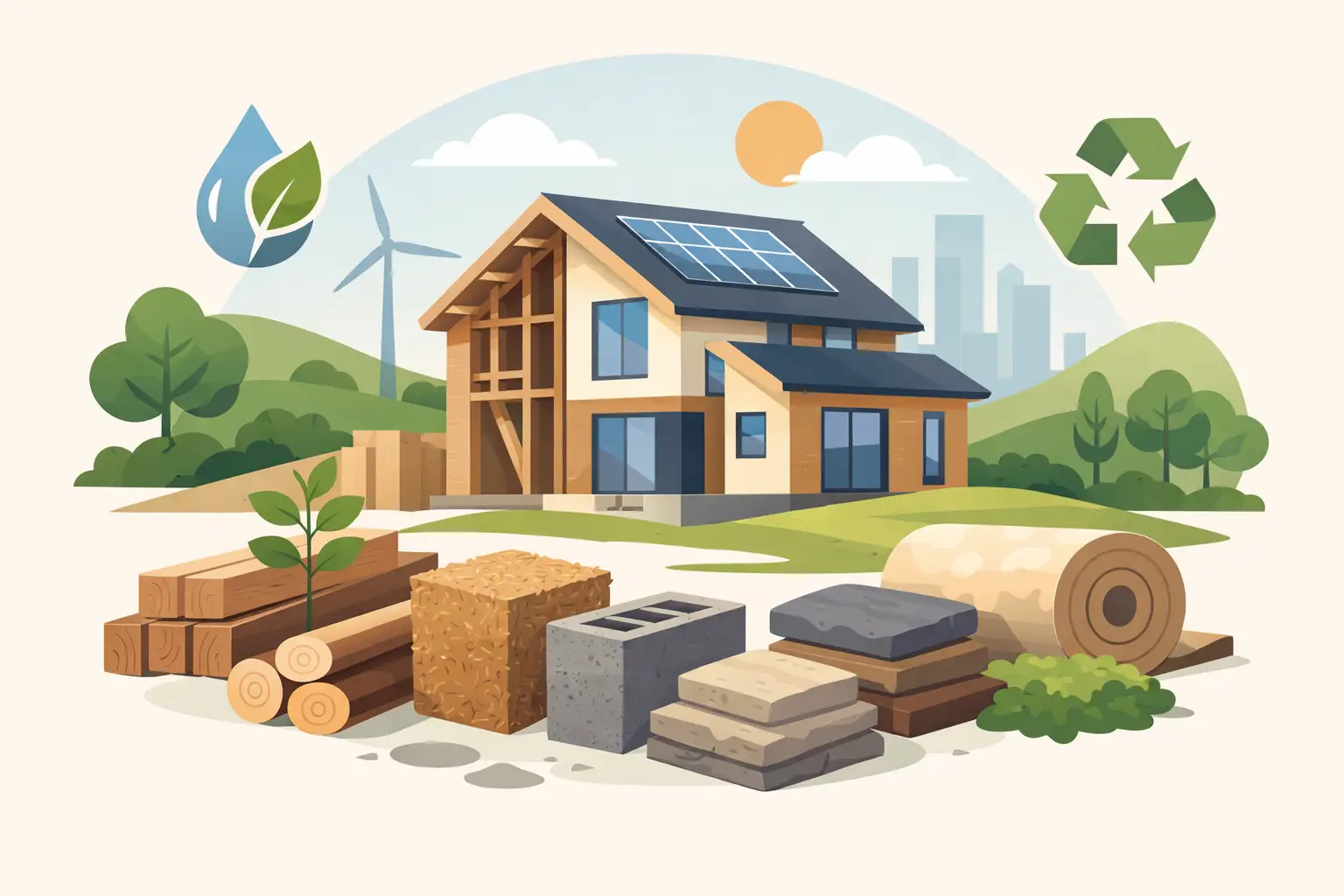
A Bay Area home can face bright sun, winter rain, coastal moisture, dry heat, and shifting temperatures in the same year. That is why sustainable home construction materials should do more than carry an environmental label. They need to fit the house, perform well in its specific setting, and hold up to the way your household actually lives.
For a kitchen remodel, addition, whole-home update, or new build, the best choices often work quietly in the background. They reduce energy loss, avoid unnecessary replacement, protect indoor air quality, and make the home more comfortable every day. The goal is not to chase a perfect material. It is to make sound decisions that work together over the life of the home.
What Makes a Construction Material Sustainable?
A sustainable material is not automatically the one made from recycled content or sold with the greenest-looking label. Those qualities can matter, but a useful decision looks at the full picture: where the material comes from, how long it lasts, how it affects the home’s energy use, whether it contains harmful chemicals, and what happens when it is eventually removed.
Durability belongs near the top of the list. A lower-impact floor that needs replacement after a few years may create more waste and expense than a durable option that stays beautiful for decades. The same principle applies to siding, roofing, cabinetry, and exterior decking. Well-built details, proper installation, and ongoing maintenance are part of sustainability too.
Local availability also matters. Materials sourced closer to Northern California may reduce transportation impacts and make future repairs simpler. Still, local does not always mean best. A product with a longer service life, better moisture resistance, or lower maintenance needs may be the more responsible choice even if it travels farther.
Sustainable Home Construction Materials Start With the Envelope
Before choosing finishes, focus on the parts of the home that control heat, air, and moisture. A high-performing building envelope can lower heating and cooling demands for as long as the home stands. It often delivers a bigger day-to-day impact than a single decorative product choice.
Insulation and air sealing
Insulation works best when air leaks are addressed at the same time. Carefully sealed openings around windows, plumbing penetrations, ducts, and framing can improve comfort in both warm and cool seasons. Cellulose insulation, typically made with recycled paper content, is one option for many wall and attic conditions. Mineral wool is another durable choice valued for fire resistance and moisture tolerance.
The right insulation depends on the assembly. An older home may have limited wall cavities. A remodel may expose framing and create an opportunity to improve performance from the inside. For additions and new construction, the design can account for insulation thickness, ventilation, and water management from the start.
Windows that match the home
Efficient windows can reduce drafts and unwanted heat gain, but glass performance should match each exposure. Large west-facing windows may need different glazing or exterior shading than a shaded north-facing wall. Frame material, installation quality, flashing, and air sealing are as important as the glass itself.
Replacing every window is not always the most sustainable first move. In some older homes, repairing serviceable windows, improving weatherstripping, or adding carefully selected storm panels can preserve materials and character. When replacement is necessary, choose windows designed for long-term performance rather than a short-term visual update.
Materials Worth Considering for Major Home Projects
The best material palette is usually a practical mix. These choices can help reduce waste and improve health and performance without making a home feel overly technical or difficult to maintain.
Wood from responsible sources
Wood is renewable when forests are managed responsibly, and it can be a warm, long-lasting material for framing, cabinetry, flooring, trim, and exterior details. Look for responsibly sourced or reclaimed wood where it makes sense. Reclaimed beams and flooring can bring real character to a remodel, although they may require extra labor to inspect, mill, and prepare.
For exterior applications, select a species and finish appropriate for the moisture, sun, and maintenance expectations of the site. Even a responsibly sourced wood product will not perform well if it is installed where standing water or persistent sun exposure will quickly damage it.
Lower-impact concrete choices
Concrete is strong, versatile, and often necessary for foundations, slabs, retaining walls, and certain structural conditions. Its production has a significant carbon footprint, so the opportunity is usually to use it thoughtfully rather than avoid it entirely. Mix designs that reduce Portland cement with supplementary materials can lower the impact of a project while still meeting engineering requirements.
Use concrete where its durability provides real value. A carefully designed slab, patio, or foundation that serves the home for generations is different from pouring extra material simply because it is convenient. Structural requirements, soil conditions, and local code should guide this decision.
Recycled-content metal and durable cladding
Metal roofing, gutters, and certain cladding products can contain recycled content and offer a long service life. A metal roof may cost more upfront than some alternatives, but its longevity and ability to reflect solar heat can make it appealing for the right house. Its appearance, sound during rainfall, slope requirements, and installation details should all be considered before choosing it.
Fiber cement siding is another durable option for homes that need resistance to rot, insects, and fire exposure. It is not a natural material, and manufacturing has impacts, but its service life and low maintenance can make it a sensible choice. In fire-prone locations, noncombustible exterior materials may also support a broader home-hardening strategy.
Healthy interior finishes
Paint, adhesives, sealants, flooring, and cabinetry affect the air inside your home. Low- or zero-VOC finishes can reduce odors and chemical exposure during and after construction. For cabinetry and built-ins, ask about formaldehyde-free or low-emitting composite wood products, especially in bedrooms, kitchens, and tightly sealed homes.
Natural linoleum, tile, hardwood, cork, and recycled-content carpet are all possibilities, but none is universally right. A busy household with pets may prioritize a floor that can be refinished or easily repaired. In a bathroom, moisture resistance and proper waterproofing matter more than an eco-friendly label on a finish that is not suited to wet conditions.
Avoiding Waste During Remodeling and Construction
Waste reduction is often decided before demolition begins. Keeping sound framing, cabinets, doors, or fixtures can preserve both budget and embodied material value. Sometimes an existing kitchen layout can be improved with new cabinetry fronts, better lighting, durable countertops, and updated appliances instead of a full tear-out.
When removal is necessary, materials can be separated for reuse or recycling when local facilities and project conditions allow. This takes planning and jobsite coordination. It is not always practical for every item, particularly when materials are damaged, painted with hazardous coatings, or tightly bonded together. Even so, a contractor who plans cuts carefully, orders accurately, and protects finished materials from damage can prevent substantial avoidable waste.
Ask the Questions That Lead to Better Choices
A productive materials conversation should begin with how you want the space to work. Do you need a low-maintenance exterior? Are you sensitive to indoor odors? Is the home exposed to wildfire risk, intense afternoon sun, or seasonal moisture? Will an aging family member need a safer, easier-to-clean bathroom in the future?
Then weigh the real trade-offs: upfront cost, expected lifespan, maintenance, repairability, health considerations, and appearance. A material that costs more initially may make sense if it reduces replacement cycles or solves a recurring comfort problem. In other cases, a simpler, readily available product installed with care is the better investment.
Jireh Contractor approaches sustainable construction as part of building a home that supports the people living in it. A responsible remodel is not about making every decision complicated. It is about choosing materials and details that respect your budget, improve daily life, and leave the home better prepared for the years ahead.
Start with the parts of your home that need to last the longest, then let the finish choices follow. That approach creates a space that feels good to live in and makes good sense to keep.
6 responses to “Sustainable Home Construction Materials That Last”
[…] choices can also include LED lighting, insulated plumbing where appropriate, and materials selected for long service life. The most responsible product is often one that does not need to be replaced […]
[…] construction practices that reduce unnecessary waste can create a healthier, more responsible home. Sustainable building should support real performance and daily comfort, not simply add features for a […]
[…] choices deserve the same care. Durable exterior finishes, responsibly sourced wood products, low-emission interior materials, and water-conscious landscaping can support a healthier, […]
[…] is not limited to equipment. It also includes choosing durable materials, reducing construction waste where possible, conserving water through efficient fixtures and […]
[…] efficient insulation, low-VOC finishes, water-saving fixtures, electrification upgrades, and responsibly sourced materials may affect the budget and lead times. They can also improve comfort, reduce resource use, and […]
[…] replacement can create repeated waste, cost, and disruption. In kitchens and bathrooms, selecting moisture-resistant finishes that can be cleaned without harsh chemicals supports both long-term performance and a more […]