
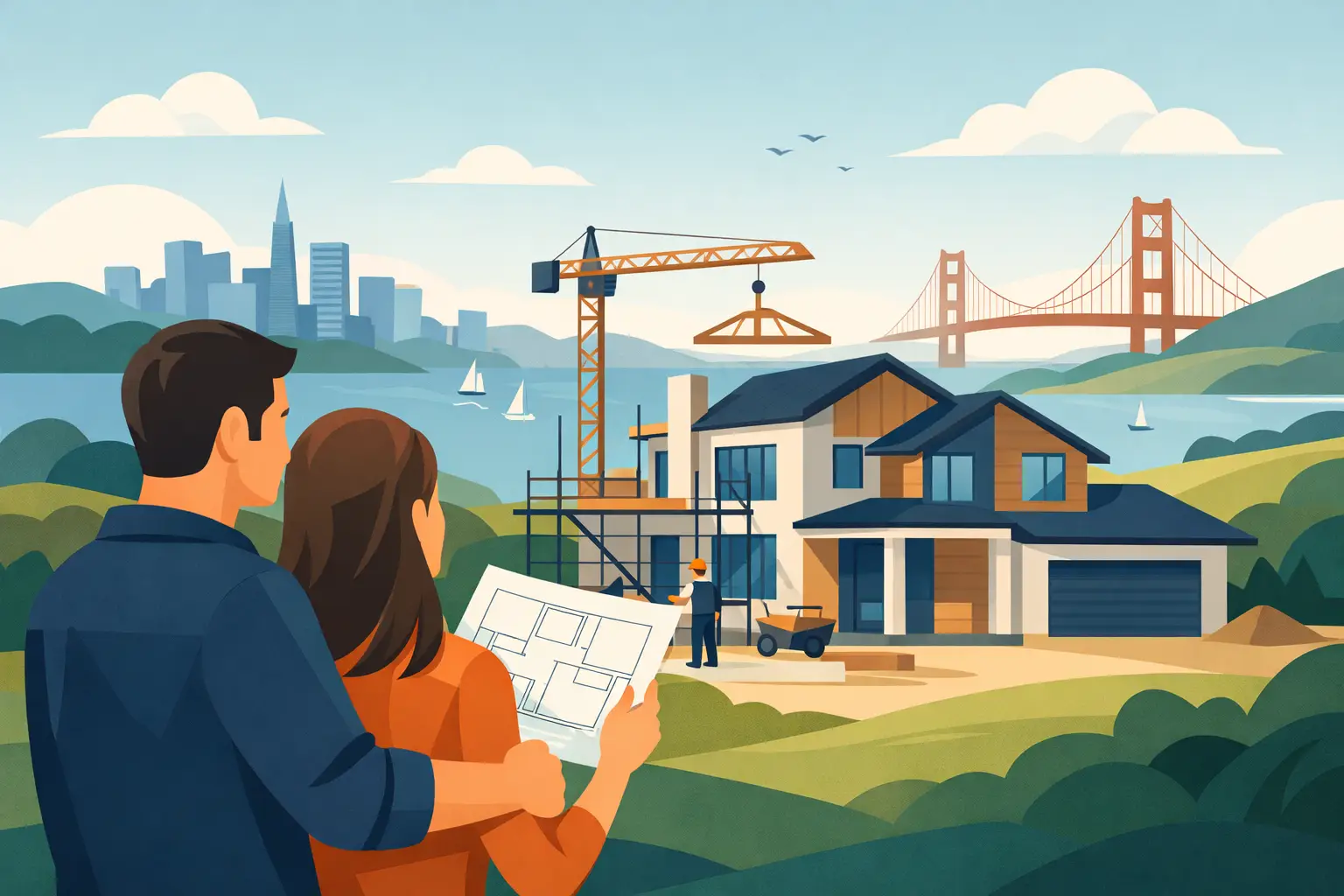
A custom home is not just a larger construction project. It is a series of decisions about how your household wants to live: where morning light enters, how the kitchen handles a busy evening, whether aging parents can visit comfortably, and how the home will perform over decades. Choosing the right custom home builder Bay Area homeowners can rely on starts with finding a contractor who can turn those daily needs into a practical, well-managed plan.
In the Bay Area, that plan must also account for real conditions. Hillside lots, older neighborhood infrastructure, local permitting, wildfire considerations, seismic requirements, and high construction costs can all shape what is possible. A good builder does not treat those factors as surprises. They bring them into the conversation early, before design choices and budgets move too far apart.
What a Custom Home Builder Bay Area Homeowners Need
The right builder should do more than construct what appears on a set of plans. They should help you understand the choices behind those plans and how each one affects cost, schedule, maintenance, comfort, and long-term value.
For example, an open kitchen and living area may create the connected space your family wants, but it may require structural changes that affect the budget. Large glass doors can bring in exceptional views and daylight, yet their performance depends on orientation, glazing, shading, and installation quality. A builder who communicates clearly will explain these trade-offs without burying you in technical language.
That balance is especially valuable for homeowners building on lots in Oakland, Berkeley, Orinda, Lafayette, and nearby communities. No two sites are the same. A flat infill property has different needs than a sloped Oakland Hills lot, and a new home near an established neighborhood may require careful attention to access, drainage, trees, and neighboring properties.
Begin With How You Want to Live
Before comparing finishes or discussing square footage, define the problems your new home needs to solve. Some families need a more useful kitchen with room for cooking, homework, and gathering. Others want private workspaces, a first-floor bedroom, an accessory living area, or a better connection between indoor and outdoor spaces.
A custom build creates an opportunity to make the layout fit your life rather than asking your life to fit an inherited floor plan. That does not mean every room needs to be oversized or filled with features. Often, the most valuable decisions are simple: more storage where it is needed, a laundry room that reduces clutter, a mudroom near the entry, or bathrooms arranged for privacy and easy use.
Think about the next ten to twenty years as well. A home that works well today can continue to serve your household through changing work routines, growing children, visiting family, or the desire to remain in place as long as possible. Universal design features, such as step-free entries and wider circulation paths, can be incorporated with care so they support comfort without making the home feel institutional.
Look for a Builder Who Plans Before Building
Construction moves more smoothly when planning is treated as real work, not a quick step before demolition or site preparation. Your builder should be ready to discuss the scope, design direction, permit path, material selections, site conditions, projected schedule, and budget allowances before the job gains momentum.
Ask how the team handles changes. Changes are sometimes necessary, especially when work reveals an unforeseen site or structural condition. The important question is whether changes are documented, priced clearly, and discussed before the work proceeds. Homeowners should never be left guessing why a cost moved or how a decision will affect the completion date.
It also helps to understand who will be responsible for communication. A single point of contact can make a major difference during a custom home project. You need someone who can coordinate the work, answer questions directly, and keep design decisions from getting lost between trades, consultants, and suppliers.
Build a Budget That Reflects the Real Project
A custom home budget is more than the cost of framing, finishes, and labor. Depending on the property, it may include design and engineering, permits, site work, utility upgrades, drainage, retaining walls, soil reports, temporary protections, and landscaping. In parts of the Bay Area, site preparation can become a major part of the project rather than a minor line item.
The goal is not to eliminate every unknown. That is rarely possible. The goal is to identify likely costs early and carry realistic allowances where decisions are still pending. A builder should be honest about the difference between a preliminary estimate and a fully developed construction budget.
Be cautious when one proposal is much lower than the others. A lower number may reflect efficiency, but it can also mean that important work has been excluded, allowances are too small, or site risks have not been considered. Compare scopes carefully. The most useful proposal is one that shows what is included and gives you a clear basis for making decisions.
Design for Performance, Not Just Appearance
A beautiful home should also be comfortable, durable, and sensible to operate. This is where environmentally responsible building choices matter. Sustainable construction is not limited to a single product or a label. It is a practical approach to using energy and materials more thoughtfully while creating a healthier home.
High-performing insulation, careful air sealing, efficient heating and cooling, quality windows, and properly planned ventilation can improve comfort in every season. These measures can also reduce energy use and help control long-term operating costs. The best approach depends on the home’s location, exposure, design, and budget, so the solution should be tailored rather than copied from another project.
Material choices deserve the same care. Durable products that require less frequent replacement can reduce waste over the life of the home. Low-emitting finishes may support better indoor air quality. Reusing suitable materials or preserving existing structures can sometimes reduce the environmental impact of a project, though this must be weighed against safety, condition, and the cost of adaptation.
Solar readiness, electric appliance planning, water-wise landscaping, and efficient lighting can also be considered from the start. Planning for these features during design is usually easier than trying to add them after walls and systems are in place.
Expect Clear Workmanship Standards
Custom construction should feel personal, but it should not be informal when it comes to quality. Details such as waterproofing, flashing, framing connections, window installation, and ventilation are often hidden once the project is complete. They are also the details that protect the home from moisture problems, energy loss, and premature repairs.
Ask a potential builder how quality is checked during construction. You want a team that pays attention to the work behind the walls as carefully as the tile, cabinetry, and paint you will see every day. Site protection and jobsite organization matter, too. They show respect for the property, neighbors, and people working on the project.
A well-run job also recognizes that construction affects daily life. If you are living nearby or managing a move, the schedule, access plan, dust control, and communication rhythm should be handled with care. There will be disruptions, but they should not feel avoidable or unmanaged.
Choose a Relationship, Not Just a Bid
Building a custom home involves many conversations over many months. The contractor you select should listen closely enough to understand your priorities, then speak plainly enough for you to make informed choices. You do not need to know every construction term. You do need a partner who respects your investment and makes the process easier to follow.
Pay attention to the first meetings. Does the builder ask thoughtful questions about your property and goals? Are they candid about constraints? Do they explain the next steps without pressure? A capable contractor will be confident about their work while remaining realistic about the decisions that still need to be made.
The best new homes are not defined only by their square footage or finishes. They are homes that support the people inside them, fit their surroundings, and use resources with care. Start with the life you want to build, then choose a team ready to build it responsibly.