
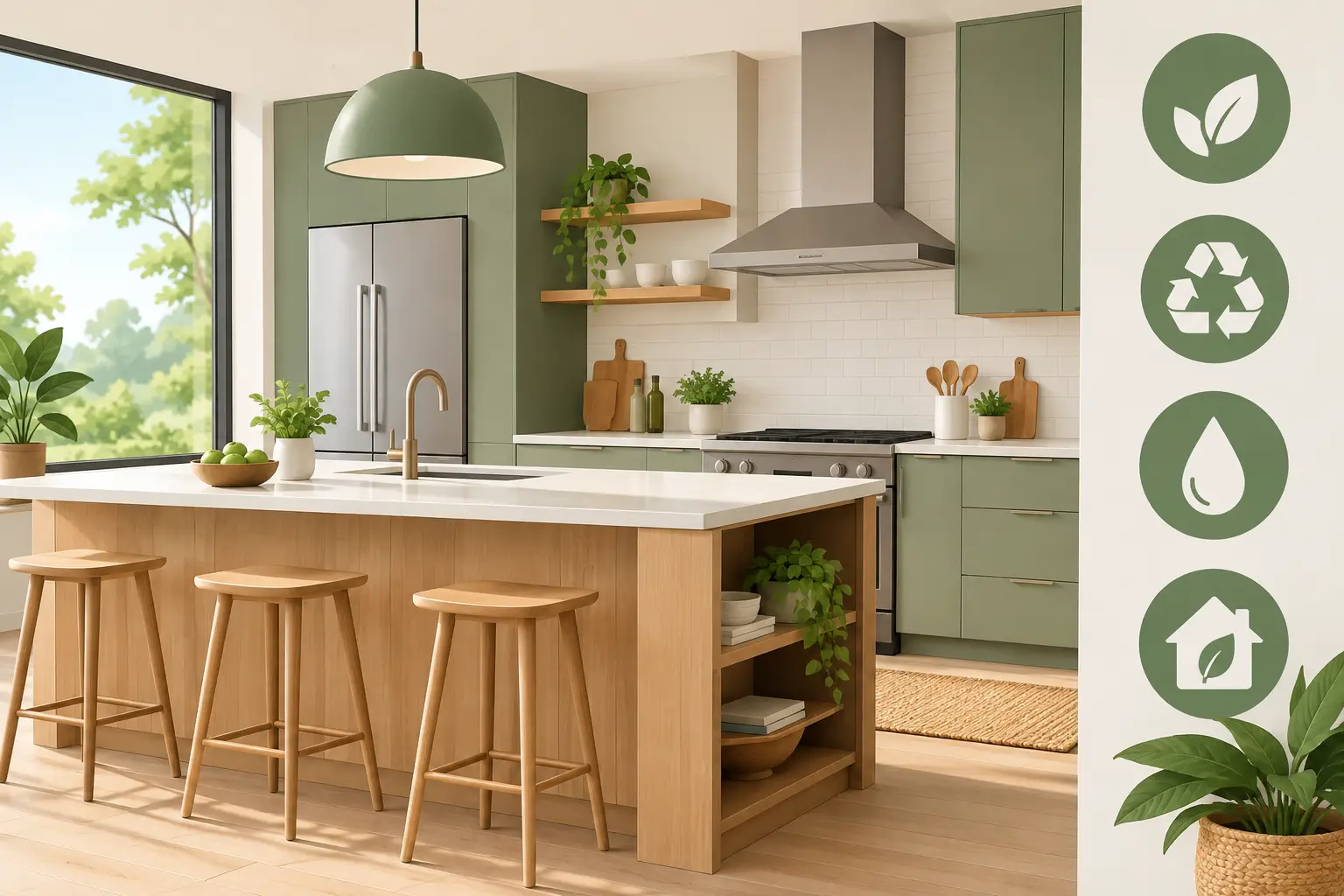
A kitchen remodel creates a rare opportunity: the cabinets are open, the old finishes are coming out, and decisions made now can shape your home’s comfort, energy use, and material waste for decades. Learning how to remodel kitchen sustainably is not about making every choice perfect or giving up the look you want. It is about directing your budget toward a kitchen that works better, lasts longer, and asks less of the environment over its life.
For Bay Area homeowners, that often starts with a practical question: what can stay? Retaining a well-built cabinet box, preserving an effective layout, or repairing a solid wood element may have a greater environmental benefit than replacing it with a new product marketed as green. A thoughtful remodel considers the whole project, from demolition and deliveries to everyday energy use and eventual repairs.
Start With a Layout That Will Last
The most sustainable kitchen is one you will not feel compelled to redo again in a few years. Before choosing finishes, look closely at how your household moves through the room. Is there enough landing space beside the range? Can two people prepare meals without crowding each other? Is storage located where it is actually needed?
A better layout can reduce waste in ordinary ways. Deep drawers make pantry items visible instead of forgotten. A pullout waste center makes recycling and composting easier to maintain. Task lighting at prep areas can reduce the need to light the entire kitchen for a late-night snack.
This does not always mean moving every wall or relocating plumbing. Major layout changes can improve a poorly functioning kitchen, but they also add cost, material use, and construction complexity. When the existing footprint is sound, keeping the sink, range, and dishwasher near their current locations can be a responsible choice. Spend where change delivers a real daily benefit, not simply because a full gut renovation feels expected.
Choose Durable Materials Over Short-Lived Trends
Sustainability is closely tied to service life. A countertop, cabinet door, or floor that wears well and can be repaired is usually a better long-term investment than a less durable alternative that needs early replacement.
For cabinets, consider construction quality before the finish color. Strong plywood boxes, durable hardware, solid joinery, and replaceable doors or drawer fronts support a longer useful life. If existing cabinets are structurally sound, refacing, repainting, or adding new fronts may be worth discussing. It depends on their condition and whether the layout still serves the home.
Countertop choices deserve the same honest evaluation. Natural stone can last for generations but may require sealing and can involve long-distance transport. Recycled-content surfaces may reduce demand for virgin materials, though their resins and manufacturing process vary. Locally fabricated materials can lower transportation impacts, but durability and maintenance still matter. There is no single best countertop for every household.
For flooring, prioritize materials that suit the demands of a kitchen. Tile can be exceptionally long-lasting, while responsibly sourced wood can be refinished rather than replaced. Cork and linoleum can also be attractive lower-impact options in the right application. The best choice is one that fits your moisture exposure, maintenance tolerance, and design goals.
Look Beyond the Label on Materials
A sustainable material should be evaluated by more than one claim on a sample tag. Ask how it is made, how far it will travel, whether it contains recycled or responsibly sourced content, and how long it is likely to perform in your kitchen.
Indoor air quality also matters. Cabinets, adhesives, flooring, and paint can release volatile organic compounds, especially when new. Low- or zero-VOC paints and finishes, along with low-emitting cabinetry and installation products, can help create a more comfortable home during and after construction. Good ventilation remains essential, particularly in a tightly sealed home.
Be careful not to let material sourcing overshadow durability. A product with a compelling environmental story is not automatically the right fit if it scratches easily, cannot be repaired, or requires frequent replacement. A contractor and designer can help compare the full picture rather than relying on a single green label.
Reduce Demolition Waste Before Work Begins
Kitchen demolition creates significant waste, but not everything removed needs to go to a landfill. The time to make a waste plan is before the first cabinet comes out.
Appliances in working condition may be eligible for reuse or recycling programs. Fixtures, cabinet hardware, doors, and usable cabinetry can sometimes be salvaged or donated. Concrete, metal, cardboard, clean wood, and certain other materials may be separated for recycling depending on local facilities and project conditions.
Salvage is not always practical. Water damage, code requirements, transportation, and labor costs can limit what can be saved. Still, asking the question early often reveals opportunities that would be missed once materials are mixed together in a demolition container.
Accurate ordering also prevents waste. Measuring carefully, planning tile layouts, and confirming lead times before demolition help avoid damaged surplus, rushed substitutions, and materials purchased twice. A well-managed project is usually a less wasteful project.
Make Everyday Energy and Water Use Count
A kitchen’s ongoing environmental impact comes largely from cooking, refrigeration, ventilation, lighting, and water use. Efficient equipment can make a meaningful difference, but it should be selected around how you live.
An induction cooktop is a strong option for many households. It heats pans quickly, offers precise control, and does not produce combustion gases inside the home. It does require compatible magnetic cookware, and some homeowners prefer the feel of gas cooking. If you are replacing a gas range, the remodel is a good time to consider electrical capacity, ventilation, and the practical needs of your cooking routine.
Choose an appropriately sized refrigerator rather than assuming larger is better. A dishwasher with efficient wash cycles can use less water than washing dishes by hand, especially when run with full loads. LED lighting uses far less energy than older lighting and works best when layered: focused task lighting for work zones, general lighting for the room, and dimming where it adds comfort.
Do not overlook the range hood. A properly sized, ducted hood removes heat, moisture, grease, and cooking pollutants more effectively than a recirculating unit. Its installation must be coordinated with the home’s structure and ventilation needs. In some homes, especially after air sealing improvements, makeup air requirements may also apply.
Water-saving fixtures belong in the plan, too. A quality faucet with an efficient aerator can reduce water flow without making everyday tasks frustrating. The goal is not a weak stream. It is using only the water needed for rinsing, washing, and food preparation.
Use Natural Light Without Overheating the Room
Daylight can make a kitchen more pleasant and reduce daytime lighting needs. Enlarging a window, adding a skylight, or opening a wall to an adjacent room may improve the space, but each option has trade-offs.
In the Bay Area, window orientation, glazing, shading, and local microclimates all influence comfort. More glass can bring welcome light, yet poorly planned glass may create glare or unwanted afternoon heat. High-performance windows and thoughtful shading can help balance daylight with energy efficiency. If an exterior wall is opened during the remodel, it is also a good moment to improve insulation and air sealing where accessible.
Plan for Maintenance and Change
A responsible kitchen is designed for real life, including repairs. Select hardware with replacement parts available. Keep spare tiles, flooring planks, cabinet paint information, and countertop care guidance after the project is complete. These small steps can turn a future repair into a simple fix instead of a full replacement.
Design flexibility matters as well. Universal features such as wider walkways, easy-grip pulls, varied counter heights, and good lighting can make a kitchen more usable over time. They may also help homeowners stay in a home longer as needs change.
Sustainable remodeling is not a fixed style or a checklist of expensive upgrades. It is a series of clear decisions about what your home needs, what can be preserved, and what will continue serving your household well. With careful planning and durable workmanship, a remodeled kitchen can feel better every day while placing a lighter demand on the resources behind it.