
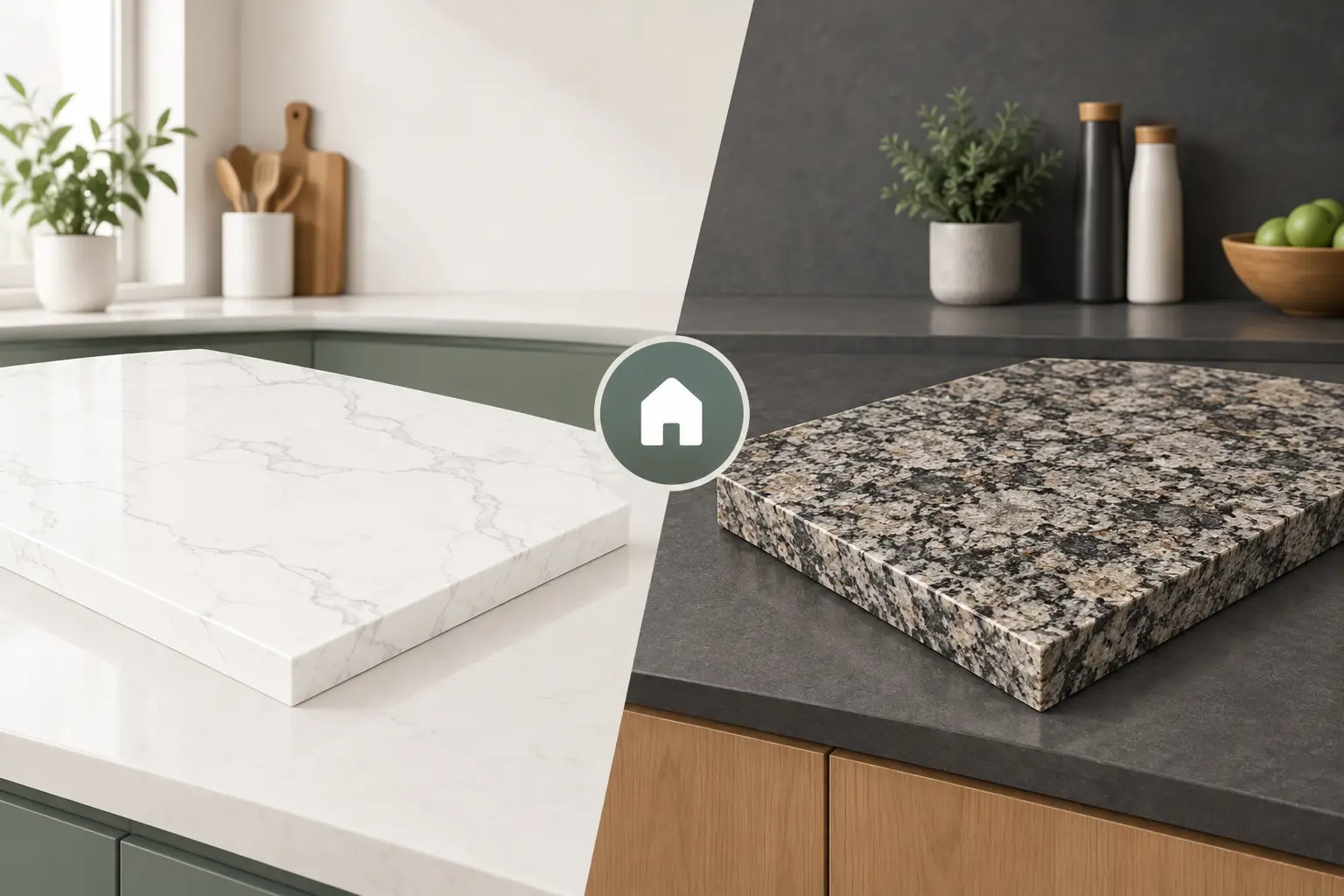
A countertop is one of the most used surfaces in a kitchen. It handles hot pans, rushed breakfasts, homework, spills, and the daily wear that comes with a busy home. When homeowners compare quartz versus granite, they are usually asking a bigger question: which surface will look right, hold up well, and make life easier after the remodel is finished?
Both are strong choices, and neither is automatically best for every home. The right material depends on how you use your kitchen, the look you want, your maintenance comfort level, and the priorities guiding your project.
Quartz Versus Granite at a Glance
Quartz countertops are engineered from crushed natural quartz combined with resins and pigments. This process creates slabs with consistent color, controlled veining, and a nonporous surface. Granite is a natural stone cut from the earth, so every slab has its own mineral pattern, movement, and variation.
That distinction affects nearly every decision. Quartz offers predictability and low-maintenance performance. Granite brings natural character and a one-of-a-kind look. A homeowner who wants soft, uniform white counters may feel more comfortable with quartz. Someone drawn to movement, depth, and the visible history of natural stone may prefer granite.
Neither choice should be made from a small showroom sample alone. Full slabs can look very different from a sample, especially with dramatic veining or bold mineral variation. Viewing the actual slab helps ensure the color and pattern support your cabinet finish, backsplash, flooring, and natural light.
Daily Care: The Difference Many Homeowners Notice Most
Quartz is nonporous, which means it does not normally need sealing. For most households, warm water, mild soap, and a soft cloth are enough for routine cleaning. Because the surface is less absorbent, it is a practical option for families who want fewer maintenance tasks and less concern about spills from coffee, wine, oil, or citrus.
Granite is also durable, but it is porous to varying degrees. A properly sealed granite countertop resists stains well, yet it needs periodic resealing to maintain that protection. The schedule depends on the stone, the sealer, and how the kitchen is used. Some granite may need attention every year or two, while other slabs can go longer.
This does not mean granite is difficult to own. It simply asks for a little more care. Homeowners who enjoy natural materials often consider that maintenance a fair trade for its unique appearance. If you prefer a countertop that asks very little after installation, quartz generally has the advantage.
Heat, Scratches, and Real-Life Kitchen Use
Both materials are hard-wearing, but they respond differently to heat. Granite handles heat very well because it is natural stone. You should still use trivets to protect the surface and avoid sudden temperature changes, but a hot pan is less likely to cause immediate damage than it would on quartz.
Quartz is highly resistant to scratches and everyday stains, but the resin that binds the material can be damaged by intense heat. Placing a hot skillet, slow cooker insert, or baking sheet directly on quartz can cause discoloration or cracking. Trivets are a simple habit, but it is worth considering if you cook often and tend to set hot cookware down quickly.
Granite can also scratch or chip, particularly at edges, but it is generally forgiving in an active kitchen. Quartz is similarly tough, though its performance can vary by manufacturer, color, finish, and installation details. No countertop is indestructible. Cutting boards, trivets, and careful use around edges will protect either investment.
What about sunlight?
This matters in bright Bay Area homes with large windows, skylights, or doors opening to patios. Granite is well suited to sunlit areas because its color is naturally stable. Some quartz products can fade or yellow with prolonged direct ultraviolet exposure, especially in locations receiving strong afternoon sun.
A kitchen designer or contractor can help evaluate window placement and select a product approved for the intended use. This is particularly important for outdoor kitchens, where granite is usually the more appropriate countertop material.
Style: Consistency or Natural Variation
Quartz gives homeowners substantial control over the finished look. It is available in clean whites, warm creams, concrete-inspired grays, deep charcoal tones, and patterns designed to resemble marble or natural stone. Its consistency can be helpful when a remodel calls for a calm, modern kitchen with coordinated materials.
Granite makes a stronger natural statement. Some slabs are subtle and refined, while others have pronounced veining, crystals, and color shifts. It can bring warmth and depth to a kitchen with painted cabinets, wood cabinetry, or a more traditional architectural style. In a home where materials are meant to feel collected rather than perfectly matched, granite can add the right amount of visual life.
There is no rule that quartz belongs only in contemporary homes or that granite belongs only in traditional ones. Cabinet proportions, lighting, hardware, backsplash selections, and slab fabrication all shape the final result. A quiet granite can feel modern. A boldly veined quartz can feel dramatic and classic.
Cost Depends on More Than the Slab
Homeowners often hear that quartz costs more than granite, but the comparison is not that simple. Entry-level granite can be less expensive than many quartz options, while premium granite with rare colors or dramatic movement may cost as much as, or more than, high-end quartz.
The installed price also includes more than the material itself. Countertop thickness, edge profile, backsplash height, sink cutouts, seam placement, demolition, access to the home, and the complexity of the kitchen layout all affect the final budget. A large island with waterfall edges, for example, requires more material and careful fabrication regardless of whether the slab is quartz or granite.
During kitchen remodeling, it is wise to compare complete installed estimates rather than making a decision based solely on a per-square-foot number. A good plan also considers adjacent investments. If new cabinets, lighting, appliances, and flooring are part of the project, the countertop should support the overall design rather than consume the budget at the expense of layout or workmanship.
Sustainability Considerations for Quartz and Granite
Both choices have environmental trade-offs. Granite is a natural material, but it must be quarried, transported, cut, and fabricated. Quartz contains natural minerals, yet it is manufactured with resins and requires industrial processing. Neither option is automatically the lower-impact choice in every project.
A more responsible decision starts with reducing waste and choosing a countertop that will serve the home for many years. A durable surface that fits your lifestyle is less likely to be replaced prematurely. Slab layout can also make a difference by using material efficiently and planning seams thoughtfully.
Ask about locally available inventory, fabrication practices, and whether the selected quartz line includes recycled content. If indoor air quality is a concern, discuss the materials used around the countertop as well, including adhesives, cabinetry, paint, and flooring. A healthier home is built through a series of practical decisions, not one finish selection.
How to Choose Between Quartz and Granite
Choose quartz if you want a low-maintenance, nonporous countertop with a consistent appearance and broad color selection. It is especially practical for busy kitchens, homes with young children, and homeowners who want an elegant surface without planning around regular sealing.
Choose granite if you value natural variation, want stronger heat tolerance, or are looking for a slab that feels entirely individual to your home. It is an excellent choice for cooks who frequently work with hot pans and for homeowners willing to maintain the stone over time.
If you are still undecided, narrow the choice by considering your actual habits. Do you want to set down hot cookware without worrying about resin damage? Do you prefer the idea of a natural stone slab, even with its variation and periodic maintenance? Or would you rather have a dependable, uniform surface that is simple to clean after a long day?
For a kitchen remodel in Oakland, Berkeley, Orinda, or nearby East Bay communities, it also helps to consider how the countertop will work with the home itself. Older homes may have distinctive woodwork, changing light throughout the day, and layouts that call for careful design decisions. The best countertop is the one that supports the way your household lives while bringing lasting value, comfort, and beauty to the room.
Before finalizing a slab, bring home samples, view full material pieces in natural and artificial light, and picture the surface during an ordinary weekday, not just a showroom visit. The right choice should feel good when the kitchen is quiet, when it is full of people, and years after the remodel is complete.